


Typoe at The Andy Warhol Museum
For immediate release
The Andy Warhol Museum announces Over The Rainbow, a new mural by artist Typoe.
The site-specific mural, on an exterior wall of the museum facing Rose Way, is inspired by Pop Art, memento mori and Froebel Gifts, colorful blocks that encourage children to make connections in their learning and experimentation.
“This mural is an opportunity to engage the public with a selection of playful forms and allow room for individuals to discover and interpret the composition,” says Typoe. “With Froebel’s gifts, children stack and align blocks within a zone of uninhibited play; with Over The Rainbow, the general public can exercise their imagination through unbridled viewing. I hope that all who visit The Warhol are welcomed by these fields of color and leave having experienced their own journey in form.”
Based in Miami, Typoe is a multidisciplinary artist whose practice plays upon the constant tension between dark and light subject matter. He has participated in gallery and museum shows around the world and exhibited his work in Mexico City, New York City, Los Angeles, Buenos Aires and Basel. Typoe is cofounder and Creative Director of PRIMARY, an art collective and gallery in Miami.
“Conceptualizing an outdoor commission created the perfect opportunity to invite and engage with a celebrated Latinx artist who has not exhibited in Pittsburgh but is also inspired by the life and legacy of Andy Warhol,” said José Diaz, chief curator. “This mural allows our curatorial programming to extend beyond our walls and will lead to additional projects in the future.”
The Warhol will present a free public celebration to unveil the mural – with the artist on Friday, November 12, 2021 from 6 –10 p.m. with music by Jesse Ley of Diamond Life and a cash bar. The museum will be open to the public until 10 p.m. and will offer half-price admission beginning at 5 p.m. as part of Good Fridays.
Over The Rainbow is organized by José Diaz, chief curator.
Over The Rainbow has been made possible with the generosity of the Richard King Mellon Foundation.
The Warhol receives state arts funding support through a grant from the Pennsylvania Council on the Arts, a state agency funded by the Commonwealth of Pennsylvania; the National Endowment for the Arts, a federal agency; and The Heinz Endowments. Further support is provided by the Allegheny Regional Asset District.
The Andy Warhol Museum
Located in Pittsburgh, Pennsylvania, the place of Andy Warhol’s birth, The Andy Warhol Museum holds the largest collection of Warhol’s artworks and archival materials and is one of the most comprehensive single-artist museums in the world. The Warhol is one of the four Carnegie Museums of Pittsburgh.
Carnegie Museums of Pittsburgh
Established in 1895 by Andrew Carnegie, Carnegie Museums of Pittsburgh is a collection of four distinctive museums: Carnegie Museum of Art, Carnegie Museum of Natural History, Carnegie Science Center, and The Andy Warhol Museum. The museums reach more than 1.4 million people a year through exhibitions, educational programs, outreach activities, and special events.
Commissioner on Philip Smith
Filmed by Jorge Gonzalez-Graupera
“All of us live miraculous lives, whether we know it or not.”
Learn more about the astonishing creativity of Philip Smith in this video, and check out the interview in The New Tropic written by Commissioner co-founder Rebekah Monson.
With the seminal 1977 exhibition PICTURES, Philip, along with other emerging artists of the time such as Robert Longo, Richard Prince and Cindy Sherman, helped shift the way we see art today. Journey with the formidable storyteller through his move to New York, artistic practice, and unusual trajectory as a bestselling writer and celebrated visual artist.

New Times on Typoe - Die Form
Words by : CAROLINA DEL BUSTO
It's one week till artist Typoe's first-ever solo show at Primary. Wooden crates that once held new, never-before-seen sculptures stand in corners of the gallery space. A thin layer of fresh sawdust covers the floor.
The artist, whose real name is Michael Gran, is co-owner and co-founder of Primary with his friends and business partners Books Bischof and Cristina Gonzalez. Although he represents one-third of the Little River gallery, "Die Form," opening Saturday, is his first solo exhibition at the space.
There's no particular explanation other than timing.
For the past five years, Gran has focused on creating large-scale pieces all over the world. He has also painted plenty of stunning outdoor — and indoor — murals. His 2016 sculpture series, "Forms From Life," even traveled to places like Argentina and, more recently, the Arkansas-based Crystal Bridges Museum.
After a much-needed reset, Gran began a journey to get back to basics and create smaller-scale pieces for a gallery show. "Die Form" is the evolution of his "Forms From Life" sculptures, featuring ten new pieces — each with the same building-block aesthetic.
The artist explains how he was inspired by German educator Friedrich Froebel, who invented the concept of kindergarten in the early 1800s. Froebel believed in the power of early education in children and its positive effects on their development. Poetically, Gran's block sculptures speak to both children and adults — to one set, they encourage creativity, to the other, they remind them that life can be both fragile and still playful.
"Die Form" is meant to be an expression of "the evolution of learning, building the world around us and how we think about life and death," Gran adds.
The sculptures in the gallery show feature some of the familiar shapes one has come to associate with the Miami artist. There's a raven, a skull, and a gravestone. Additionally, Gran has incorporated new shapes, like a blood drop and a flower. He explains that he intends to add new building blocks of life with each progression of his block pieces.
"Every time I do these pieces, more and more [blocks] will keep getting added, and eventually it will be like this hieroglyphics language that I'm sort of creating over time," he explains, extending his arms to either side of his body as if envisioning a room full of Typoe building blocks.
He smiles and looks at his partners, Bischof and Gonzalez, seated across from him.
The three creatives and art lovers founded Primary with the intent of showcasing works and artists they love.
"At the end of the day, we showed it because we were in love with it," Bischof says as his partners nod in unison.
The three have been working together in the local arts community for nearly two decades. They met in the early aughts and over the years they've become a family. One can understand what the other is thinking by dint of a simple glance or a subtle movement of the lips.
Arms crossed, Bischof silently gazes around the gallery space, pausing for a moment on every new piece hung in its place.
"He understands the space differently than anybody else would," Bischof says of Gran's show. "Typoe was a part of every step [of the gallery's design and creation]. There's just a different type of spirit that I think he's going to bring to the property [with 'Die Form']."
Reflecting on assembling Gran's first solo show with Primary, Bischof adds, "The public works felt so amazing, but there was a different body of work being made in the studio versus what people were experiencing with the public pieces and murals. So how do you then bring that energy indoors?"
"I play more outside, and I'm trying now to come back inside," Gran puts in, grinning like a kid.
"The continuation of 'Forms From Life' into 'Die Form' just shows that there are infinite combinations and infinite possibilities and that, in a nutshell, is who Typoe is and how he approaches life," Bischof explains.
"I think with everything in life — with age and experience — comes this sense of really getting to know yourself and knowing the why," Gonzalez adds. "In these works, you can see the why, the intention behind the pieces, and you can see [Gran's] progression [as an artist] and it's really beautiful. The work really shows that."

(📸: Jorge Gonzalez Graupera)
New Tropic on Philip Smith
‘All of us live miraculous lives, whether we know it or not.’
A chat about creativity with Miami artist Philip Smith
Words by Rebekah Monson
Famously known for being one of the five original artists featured in the seminal exhibition “Pictures” in 1977, Philip Smith was one of the creatives who established The Pictures Generation movement, which went on to fundamentally shift how people view and interpret art. Other notable artists of the movement include Cindy Sherman, Richard Prince, Laurie Simmons among others.
As a young artist, Smith relocated from his home in Miami to New York. He worked as a writer for Andy Warhol’s Interview magazine and went on to serve as a managing editor of GQ to supplement his income as a young painter. His unusual trajectory as both a storyteller and visual artist has been captured in his memoir, Walking Through Walls; the book was published by Simon and Schuster and shares his true story of growing up with a father who discovers that he has supernatural powers.
Smith has participated in the Whitney and Beijing Biennials, and his artwork is in the permanent collection of the Whitney Museum of Art, Boston MFA, MOCA, San Diego, Dallas Museum of Art, Detroit Institute of Art, and Allen Museum in Oberlin, among others.
Commissioner is hosting a virtual conversation with Philip Smith and Chana Budgazad Sheldon, executive director of MoCA North Miami, on Thursday, Oct. 21 at 6 p.m. Registration is free, and you can learn more about him by reading below.
We are thrilled to have you as our first Commissioner artist of the season. Your history in Miami is long — you were born here, and you left to build an incredible career in New York in art and media, and here you are again. Tell us about that journey.
I grew up in a very different Miami than the Miami of today. Back then, the evening news didn’t even bother to list Miami on the national weather map; it was that inconsequential to the rest of the country. Along with being left off the national weather map, there was no art scene — Miami was an art desert. There weren’t many opportunities to have conversations with other people about art or to show your work.
There were maybe five or 10 local artists at the time and no gallery scene to speak of. My parents had come from NYC and were members of the Museum of Modern Art. Every few months a catalog of the latest exhibition would appear in the mail, and instead of comic books, I would study these catalogs for days. Art was a mysterious language that I wanted to learn to speak. My father painted and took photographs that were exhibited in Steichen’s gallery; he was my inspiration to become an artist. As a teenager, I subscribed to every New York alternative paper I could find to stay informed about the NYC art world.
Realizing there was no chance to be a part of any meaningful dialogue about art in Miami, I left and started a new life in New York which was like Oz — magical and alive. But I also missed Miami. To comfort me, I would have the Miami Herald delivered everyday in New York. More than anything, I missed the tropical beauty of Miami, the light, the trees, the breeze. The environment here is so beautiful. I have traveled all over the world, and people will laugh at me [for saying as much] but I never found anywhere as beautiful as Miami, especially a place that is also a major metropolitan area.
A few years ago, I decided to build a studio and living space here. Now, I basically commute and go back to New York every two to three weeks but produce the majority of my work here. In Miami, I don’t have the interruptions and distractions of the City and can just work.
You’ve had this long and storied career, notably as part of establishing The Pictures Generation with the exhibition in 1977. How did “Pictures” become central to your practice? How has your work evolved?
We were five young artists who were just doing our work without any thought of a larger cultural impact. It was really the brilliance of Douglas Crimp, the curator who put us all together. He visited a number of young artists in their studios until he settled on the five of us. He wrote about our work in a very cogent and art-historical way. It was Douglas who really had the vision that we were all breaking new ground. For decades, no one really cared about the “Pictures” show, but in the last 10 years, suddenly “Pictures” has become a recognized movement.
At the time of “Pictures,” the New York galleries were just showing minimalism or conceptual work. There was very little painting and certainly no figuration. The common thread in all our work was that we were finding images on television, in advertising, in movies and in books that we thought meant more than what they were supposed to represent. Our intention was to bring a different meaning and context to these everyday images. This was in a pre-digital era, so there were no computers or software to transform these images. We had to find ways to reinvent these images and make them mean something else.
Initially, much of the “Pictures” work was ironic or social commentary. Each of us has evolved over the years from that starting point. Increasingly, my work has focused on transcendent metaphysics and mysticism. This was not a popular position to take, although that tide seems to be turning as our culture changes. In some ways, my work looks the same to me as it did in the “Pictures” exhibition. However, today’s work is radically different from the early work, although there’s still a type of universe of images. Plus, I finally began using my photographic source material as works themselves. In my mind, it’s all connected even though it may not look that way to the viewer.
Much of my work is based in my childhood. In the ‘60s, my father, who was an international high society interior decorator, suddenly discovered that he could talk to the dead and heal the sick. As a kid I was surrounded by seances, talking spirits, and miracle cures. This was my reality. I have also been extremely fortunate to travel to the great centers of ancient culture and to spend time with their astonishing architecture and very powerful works of art that have lasted thousands of years and been a part of the human cultural DNA.
Whether it was seeing work in Egypt or Burma or Peru, these ancient creations had a profound effect on me. As a result, I take my responsibility as an artist very seriously. My job is to communicate and share a vision with the viewer, and I want that experience to move people to the light. In Tibet, the monks make paintings called thangkas. Usually, these are pictures of Buddha, but their purpose is to create a sense of enlightenment or a blessing in the viewer. In some small way, I hope my work accomplishes a similar mission.
Art has always been about communicating ideas, originally to pre-literate societies. The Sumerian rulers, the Egyptian pharaohs, and the Church had to communicate a sense of awe as well as a sense of the social and religious order to their populations. Art has evolved and serves a different purpose now. However, all of us live miraculous lives, whether we know it or not. One of art’s jobs is to communicate that sense of the miraculous, of wonder. That is the job I want to do.
In addition to your work as an artist, you also wrote a memoir about your dad. You also wrote for magazines such as Interview and GQ. What was that like to balance careers in writing and visual arts?
My paintings are also a kind of visual language. They are involved in storytelling, although in a different way from my writing. While the paintings are not made of sentences or paragraphs, there is an innate structure and logic to each piece and they are a pictographic language. Writing in words is much more difficult for me than writing in images. It requires a different portion of my brain. When I wrote the book about my father, I thought the first draft was great, and then I went back to read it and none of it made any sense. I was just putting words on paper. It took about fifteen versions of the book to get it right. I had to learn to communicate in a pictorial way with words; it was a challenge, but I think I did it.
This interview was produced in partnership with Commissioner, a membership program that aims to foster a community of new local art collectors in Miami and share the stories of 305 arts and artists. The interview was conducted by Commissioner and WhereBy.Us co-founder Rebekah Monson and has been edited for length and clarity.

Primary featured in Top Ten
Primary Projects (stylized Primary.) was born in the early aughts as a collective that would gather local talent to paint murals in the then-burgeoning neighborhood known as Wynwood. Throughout the years, Primary has occupied many locations, but the gallery now has a permanent home in Little River, not far from the train tracks. From the outside, the plain white exterior leaves plenty to the imagination. The interior, however, with exposed concrete paired with fresh white walls and wooden beams overhead, make the space an ideal setting for all sorts of magical and memorable artworks. Founded in 2007 by three friends, artist Michael Gran (who goes by the street name Typoe), Books Bischoff, and Cristina Gonzalez, Primary has exhibited works by national and international artists. Opening this month: a solo show by Typoe — a first for the artist in a handful of years.

Six Questions with Evan Robarts via Tique
Tique asks six questions to an artist about their work and inspiration. This week: Evan Robarts.
How do you describe your own art practice?
The majority of my process happens outside the studio. I’m constantly collecting, recording, and sketching detritus in urban areas which will then collapses into a visual language later on. I lean more towards non-representational forms that build on current events or books I find myself reading.
Which question or theme is central in your work?
The interplay of materials asks fundamental questions regarding the existence and consumer culture. What is man’s relationship to his community, himself, and the planet?
What was your first experience with art?
As a child, I have vivid memories of making drawings on paper which brought me into elevated emotional states. Those moments became the main sale in my life and set a trajectory for my interests moving forward.
What is your greatest source of inspiration?
Clipped bike locks, deflated balls, exhumed gas canisters, and broken broomsticks and scaffolding are a few of the things that fascinate me. I see them as abandoned spirits, the cast-offs of society.
What do you need in order to create your work?
Technically I feel satiated just drawing in my notebook but yes, there are times when I want to tumble objects around in a physical space. I often go through significant stretches of time with no studio so it’s not really a necessity carved into stone. To answer your question though that’s what it would be – a designated space like a studio where I can disconnect from the world and give myself to my work.
What work or artist has most recently surprised you?
Re-discovering Purvis Young’s drawings have been a wave I’m still riding. I grew up in South Florida so there’s a lot of nostalgia for me when I see all the moments and energy he’s channeling.

Evan Robarts - Common Practice - New Book by Skira
Common Practice: Basketball & Contemporary Art is the first comprehensive illustrated publication to explore the relationship between basketball and contemporary art. The collected artworks take readers on a journey to understand the game of basketball not only as a physical activity played between a series of lines, but also as a reflection of a greater human experience.
This hardcover publication from Skira Editore covers more than a century of artwork from over two hundred leading artists—including Nina Chanel Abney, Emma Amos, Romare Bearden, Salvador Dalí, Elaine de Kooning, Keith Haring, David Hammons, Barkley Hendricks, Robert Indiana, JR, KAWS, Titus Kaphar, Jacob Lawrence, Roy Lichtenstein, Sharon Lockhart, Robert Longo, Claes Oldenburg, Paul Pfeiffer, Alex Prager, Richard Prince, Robert Rauschenberg, Faith Ringgold, Lorna Simpson, Andy Warhol, Ai Weiwei, and Wendy White.
Edited by Carlos Rolón, Dan Peterson and John Dennis, with text from Michelle Grabner, Titus Kaphar, and RaMell Ross. Featuring over 300 full-color illustrations.
100% of the proceeds from the Special Edition and Collector's Edition, available exclusively at commonpractice.online support Project Backboard, a non-profit organization that works with artists to renovate and improve public basketball courts around the country. For more information about Project Backboard visit projectbackboard.org.

“Rainbow” - Typoe - 2021
Primary named Best Gallery in Miami
Located in the up-and-coming neighborhood of Little River, not far from the railroad tracks, is a sleek white building nestled in a residential area. You might pass by and not think much of it. But behind this discreet façade is Primary (stylized Primary.), an art gallery founded in 2007 that features works from local, national, and international artists. Its interior, with exposed concrete paired with fresh white walls and wooden beams overhead, make the space feel like the ideal setting for all sorts of works of art. A recent exhibition, titled "Can't Wait to Meet You," was organized to highlight bright, fun works that would be suitable for children. Why, you ask? Because two of its founders, Books Bischoff and Cristina Gonzalez, just welcomed their first child together.

Wade Tullier in Clay Pop at Jeffrey Deitch
Clay Pop, Curated by Alia Williams
September 10–October 30, 2021
18 Wooster Street, New York
Clay Pop documents the reinvention of ceramic sculpture by a new generation of artists. A medium that has often been characterized as more craft than art is now an exciting platform for formal and conceptual innovation. A medium that traditionally diverged from engagement with popular culture is now adding a new dimension to Pop Art.
Paralleling current concerns in painting, many of the artists featured in Clay Pop are also exploring issues of gender, race and identity, using clay in new ways to engage with social issues. Artists are using the medium to create a personal narrative. Clay is being pushed beyond the confines of craft and design.
“Artists are taking a traditional medium and turning it on its head,” says the exhibition curator Alia Williams. An earlier generation of ceramic artists is referenced, but the range of influences encompasses vernacular commercial imagery and artistic sources from African American assemblage to Walt Disney. Much of the new work is exuberant and figurative, expanding on how the medium of clay has been traditionally used. Glazes are especially colorful. Funk art from 1970s Northern California is a source, as is Claes Oldenburg’s store. Some of the artists also draw on artistic influences from the Middle East, Africa and Asia.
Many of the 37 artists in the exhibition know each other, forming a community around this new direction in ceramic sculpture. The community is especially dynamic in Los Angeles, where several of the artists share kilns and studios.
Clay Pop is the first large exhibition to document this new artistic direction. Curator Alia Williams is the Managing Director of Jeffrey Deitch, New York Exhibition design is by Charlap Hyman and Herrero. The artists participating in Clay Pop are:
Diana Yesenia Alvarado, Alex Anderson, Trisha Baga, Alex Becerra, Genesis Belanger, Seth Bogart, Chen Nien Ying, Woody De Othello, Sharif Farrag, Ryan Flores, Dominique Fung, Melvino Garretti, Raven Halfmoon, Kahlil Robert Irving. Elizabeth Jaeger. Devin B. Johnson, Heidi Lau, Grant Levy-Lucero, Candice Lin, Jasmine Little, Lindsey Mendick, Keegan Monaghan, Masato Mori, Ruby Neri, Brian Rochefort, Jennifer Rochlin, Brie Ruais, Sterling Ruby, Sally Saul, Alake Shilling, Adam Silverman, Jessica Stoller, Katie Stout, Magdalena Suarez Frimkess, Wade Tullier, Amia Yokoyama, Bari Ziperstein

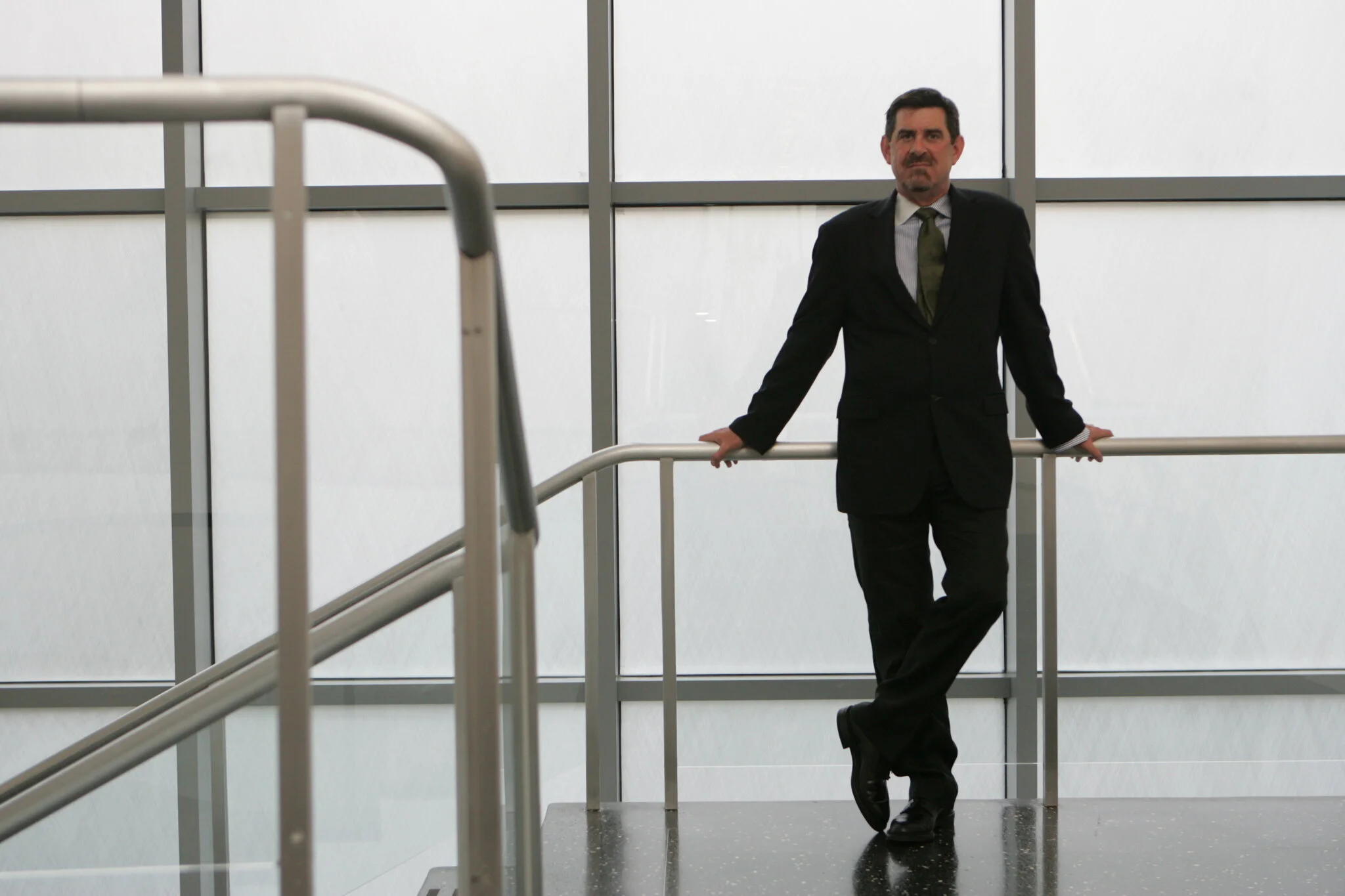
Terence Riley : 1954 - 2021
Terence Riley, Architectural Force in the Museum World, Dies at 66
He was the chief architectural curator at MoMA, overseeing shows and the museum’s massive redesign, then moving on to the Miami art scene.
Terence Riley, who as an architectural curator and museum director was instrumental in bringing to fruition two of the most important works of 21st-century museum architecture, died on Monday at his home in Miami. He was 66.
His family said the death was sudden, caused by an underlying heart condition.
As the chief curator of architecture and design at the Museum of Modern Art, Mr. Riley helped select and guide the Tokyo-based architect Yoshio Taniguchi in the museum’s $858 million expansion, which was completed in 2004.
Later, as director of the Pérez Art Museum Miami, he worked with the Swiss architecture firm Herzog & de Meuron to create a new home for the museum that has been acclaimed for its design and integration into its environment. Along with his museum duties, Mr. Riley maintained an architectural practice, founded in 1984, with John Keenen.
“He always impressed me with his wicked sense of humor and his fierce intelligence,” Glenn D. Lowry, MoMA’s director, said in an interview. “He seemed to remember details about every architect he ever talked to.”
In his 15 years at MoMA, Mr. Riley curated shows on Frank Lloyd Wright and Mies van der Rohe that shed new light on those quintessential modern architects. He engaged contemporary themes in the exhibitions “The Un-Private House” (1999), “Light Construction” (1995) and “Tall Buildings” (2004), bringing attention to architects like Kazuo Sejima, Toyo Ito and Jeanne Gang, who were not yet well known.
Mr. Riley, right, with the MoMA curators Peter Reed and Paola Antonelli in 2004. “He seemed to remember details about every architect he ever talked to,” the museum’s director said.Credit...Michael Weschler for The New York Times
As MoMA proceeded with its massive expansion in the early 2000s, Mr. Riley asked 10 international architects of widely varying fame and sensibility to prepare sketchbook designs, which he then displayed at the museum. The invitees included Mr. Taniguchi, an architect little known outside his native Japan. Mr. Riley urged the museum to accept his design, which reorganized the daunting tangle of additions to the museum home, originally built in 1939, into a coherent whole.
Mr. Riley’s role in the project, Mr. Lowry said, “was to talk with the curators about their ideas and find the right language for Yoshio to understand what they meant.”
Mr. Riley said the Modern’s renovation had whetted his appetite for more such work. Credit...Fred R. Conrad/The New York Times
With overlapping slabs of silvery aluminum, black granite and glass, the new MoMA opened in 2004, adding 252,000 square feet for a total of 630,000, all wrapped around a soaring atrium. The taller and more generously proportioned galleries permitted a refreshingly varied mounting of art, more visual breathing room for each piece, and more space for the ever-growing crowds of visitors.
Nicolai Ouroussoff, reviewing the building in The New York Times, called it “one of the most exquisite works of architecture to rise in this city in at least a generation” and “a near-perfect example of how architecture can be forceful without competing with the art it enfolds.”
Terence Riley was born on Nov. 6, 1954, in Elgin, Ill., to Philip and Mary Jo (Lundberg) Riley. His mother was a homemaker; his father ran a printing business. Terence earned a bachelor of architecture degree from the University of Notre Dame and a master’s degree in architecture and urban planning from Columbia University.
He is survived by two brothers, Dennis and Brian.
Mr. Riley’s curatorial work began when he was chosen to run the Arthur Ross Gallery at Columbia, an exhibition space devoted to architecture. His work there drew the attention of Philip Johnson, who had founded the Museum of Modern Art’s architecture department. Mr. Riley was brought into the department and became the chief curator for architecture and design in 1991.
Later in his tenure, he helped start the MoMA/P.S. 1 Young Architects Program, which showcased early-career architects. Given small grants, the chosen architects created immersive environments in the courtyard of the P.S. 1 Contemporary Art Center in Long Island City, Queens. The exposure, and the MoMA imprimatur, helped launch influential firms like SHoP Architects and WORKac.
“It was his most innovative brainchild,” said Barry Bergdoll, a Columbia professor in architectural history who succeeded Mr. Riley as MoMA’s chief architecture curator.
Mr. Riley left MoMA in early 2006 to become director of the Miami Art Museum (subsequently renamed the Pérez Art Museum). He raised its profile with a series of well-received exhibitions and embarked on an ambitious plan to build a new home for the museum next to Biscayne Bay. He brought in Herzog & de Meuron to design it.
“Jaques Herzog told me the real reason he wanted to do this museum was to work with Terry,” said Mary E. Frank, who was about to become the museum’s board president at the time.
The museum needed to augment public funds with more than $100 million in private gifts. But fund-raising lagged behind, and the project took years. Finally, with plans in place, Mr. Riley stepped down in 2009, returning to the Miami office he had opened for his architecture practice.
The Miami museum, at a cost of $220 million, opened in 2013. Its design was striking for its broad concrete-beam roof overhangs latticed with wood from which long tubes of plantings are suspended like gentle draperies. The overhangs and plantings protect glass walls and outdoor decks — beloved by the public — from the searing sun.
The current director, Franklin Sirmans, said Mr. Riley had guided the architects in making a building well suited to Miami.
“The building never imposes itself upon you,” he said. “It’s not a museum where you stand 56 inches away from a painting and just appreciate. He envisioned a constantly active institution, a community center that is connected to our day-to-day surroundings.”
After Mr. Riley left the museum, he and Mr. Keenen continued to work on projects in Miami, including with the developer Craig Robins, who wanted to channel the energy unleashed by the Miami Art Basel art fairs. “Terry was the architect, but they were also an alliance, scheming together,” said Paola Antonelli, a senior curator at MoMA who remained close to Mr. Riley.
Through his company, Dacra, Mr. Robins transformed a neighborhood of anonymous product showrooms into the city’s Design District, mixing artists with splashy designer boutiques and restaurants. “He saw that art and design would be the new rock stars,” Mr. Keenen said.
Keenen/Riley’s latest project for Mr. Robins was the Museum Garage, whose facade is wrapped with exuberant decorative works by architects curated by Mr. Riley.
“Terry loved design, but he also loved the often complicated process of getting things built,” Mr. Keenen said. “He had more patience than I ever did, as well as the mind and people skills to see things through.”
El Mac Returns to Miami - Public Works
First brought El Mac to paint in Wynwood in 2007 and again in 2008. Excited to have worked with El Mac and Related Group to bring this magnificent mural to Miami. Ten years later, public murals have transformed the identity of Wynwood and influenced endless districts around the world. Cheers to Young Arts for helping connect El Mac with the young creatives included in this mural and cheers to PBS for this killer short.


